AI Tsunami: Scaling, Ethics & Future Disruption
 Factverse Insights|Technology|16 min read|Mar 15, 2026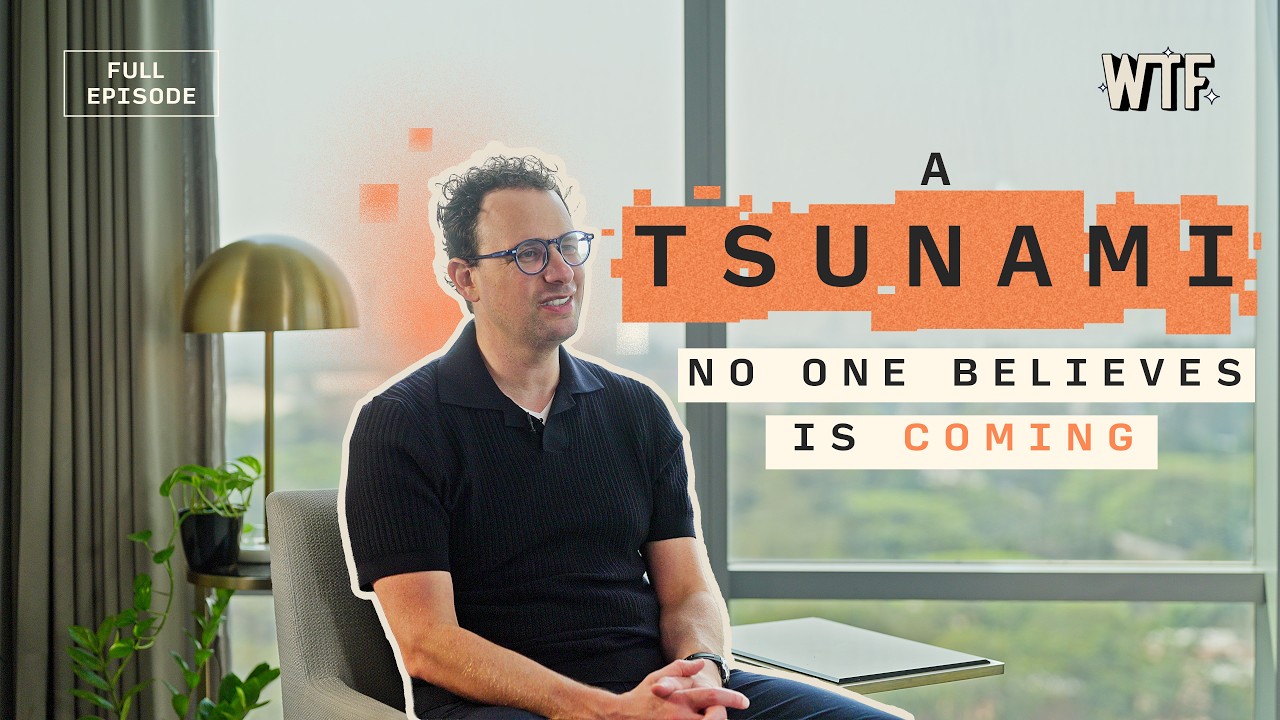
Dario Amodei and Nikhil Kamath unpack AI’s rapid scaling, ethical quandaries, and deep industry disruptions as an unstoppable AI tsunami looms.
Introduction
In a riveting episode of People by WTF, Dario Amodei sat down with Nikhil Kamath to discuss the approaching AI tsunami, its implications for society, and the looming disruption across industries. The conversation traversed a range of topics including AI scaling laws, governance structures, ethical concerns, and the real-world dynamics of human-AI interaction. Amodei’s insights provide a deep-dive into why society may not be ready for the aggressive pace of AI evolution, and what actions – from governance to education – may help steer this transformative force in the right direction.
In this episode, Dario Amodei explained, "if you scale up models with more data and compute, you eventually create a kind of intelligence that can rival or even exceed human capacity." With this statement, he set the stage for a discussion on how AI is rapidly evolving and the societal risks that come with such unprecedented technological leaps.
AI Scaling and Governance
The Science of Scaling
At the core of the discussion is the concept of scaling laws. Dario Amodei elaborated on the analogy by comparing AI to a chemical reaction: "If you put in the right ingredients – data, compute, and model size – you get an explosion of intelligence." This simple yet powerful illustration helps demystify how AI models are built. Unlike the gradual progress in more traditional computational approaches, the exponential leaps in performance have taken the world of AI by storm. Amodei recalled witnessing the early signs of this phenomenon with GPT-2 in 2019, reinforcing his belief that the scaling loss and sheer size of models are critical in driving AI capabilities.
Governance and Responsible Development
A recurring theme in the conversation was the lack of public consciousness regarding the rapid advances in AI technology. Despite the clear signs of a looming technological tsunami, Amodei noted, "it's as if this tsunami is coming at us and yet people are coming up with explanations that it's just a trick of the light." This observation points to a disconnect between the technical community and broader societal awareness. According to Amodei, there is a pressing need for robust governance structures to ensure that as these models advance, they are developed safely and ethically.
Anthropic, the company co-founded by Amodei, has taken a unique approach by establishing what he refers to as a "long-term benefit trust" in its governance. This body, composed of financially disinterested individuals, serves as a check on the traditional profit-driven company structure. By incorporating such governance measures, Amodei aims to safeguard against the concentration of power and the potential misuse of AI technology.
The Debate Over Regulation
The conversation also delved into the challenges of regulating AI. Amodei recounted how his company chose not to release an early version of their Claude model in 2022 due to concerns that it might kick off an arms race, emphasizing that caution can sometimes mean sacrificing short-term commercial gains for long-term safety. Amid this climate, he stressed, "we need to slow down a bit, at least temporarily, to steer this technology in the right direction."
He further argued that while market forces drive innovation, government regulation plays an essential role in ensuring that the technology is developed and deployed in a way that benefits society rather than just a privileged few. This sentiment resonates with his cautious optimism: a belief that while AI holds enormous promise, it must be tempered with responsible oversight.
Ethical Implications and Industry Disruption
The Dual-Edged Sword of Personalization
One of the most fascinating parts of the discussion was the exploration of AI’s potential to understand users on an intimate level. Amodei described how tools like Claude surprise users by knowing them so well – a capability that stems directly from the model’s integrated access to personal data. He noted that during experiments, a colleague’s diary fed to the AI enabled it to predict additional fears or concerns that the individual had not explicitly mentioned.
This level of personalization, while offering immense benefits such as tailored advice and enhanced productivity, also raises serious ethical concerns. In a world where an AI knows you better than you know yourself, there is a real risk of exploitation. Data privacy and manipulation loom as significant threats if such capabilities fall into the wrong hands. Amodei warned that if these tools are used solely for commercial gains, they could easily transform into mechanisms for surveillance, data exploitation, or even political manipulation.
Capitalism and the Threat of Market Consolidation
In the realm of industry disruption, the episode turned its critical eye toward the massive concentration of power in tech companies. Amodei candidly expressed discomfort with the rapid accumulation of wealth in a handful of firms. "There’s a certain randomness... that a few people end up leading companies that grow incredibly fast," he observed, hinting at the potential dangers of such concentrated influence.
He used the analogy of the steam engine revolution to illustrate how initial control over innovative technology might eventually give way to broader, more integrated ecosystems. In the early days of the IT services industry, states like Bangalore thrived when large companies dominated, yet over time, the landscape evolved to allow smaller, more agile players to take their place. Amodei argued that AI may follow a similar trajectory: while major players dominate today, there will be niches and specialized fields where smaller companies can thrive, provided they add unique value beyond the simple replication of a core AI model.
Human-Centric Skills in an AI-Driven World
A recurring concern in the conversation is the impact of AI on human skills. When asked about the risk of AI making humans 'stupid' by outsourcing cognitive tasks, Amodei was measured in his response. He explained that although AI might excel in specific tasks—such as generating code, analyzing data, or even composing essays—the role of humans in more nuanced areas like design, ethical judgment, and interpersonal relationships remains irreplaceable.
He compared the potential deskilling that could occur if AI were misused to previous technological shifts. "If calculators killed our ability to do arithmetic, what muscle is AI killing?" he queried, suggesting that while there is a risk of devaluing certain human skills, there will always be an inherent need for critical thinking and human oversight. He emphasized that innovation should complement rather than replace human insight and that educational and regulatory frameworks need to adapt to ensure that society continues to nurture these indispensable skills.
Open-Sourcing vs. Closed Ecosystems
Another important discussion point was the debate over open-sourced versus closed AI models. With emerging players from China and elsewhere developing models that can rival those of established companies, there is a growing conversation over intellectual property (IP) and access. Amodei noted that while many of these new models perform well on benchmarks, they may be over-optimized for specific tests rather than real-world applications. This is the kind of nuance that enterprise users must consider when choosing a platform.
Amodei’s emphasis, however, is on quality and performance. He explained that the best AI models, regardless of their proprietary status, are in a league of their own in terms of cognitive capability. This quality trumps issues of open-sourcing versus closed systems, arguing that the ultimate objective is to deliver the smartest, most effective models for the task at hand. This high standard, he believes, is what will drive the AI industry forward and shape its long-term economic model.
Global Implications and the Role of India
A Strategic Market and Collaborations
India’s burgeoning technology ecosystem also received significant attention during the discussion. Amodei has visited India on multiple occasions, and he sees a unique opportunity for collaboration. While many companies view India primarily as a consumer market, Anthropic sees it as a partner in innovation. Amodei explained, "We’re not just here to gain consumers – our goal is to work with Indian companies to provide tools that enhance their capabilities." This cooperative approach, he believes, can help to democratize AI, ensuring that technological benefits are distributed more evenly.
In this context, traditional IT services companies in India are seen as critical partners. These firms have deep local knowledge and longstanding relationships that can help bridge the gap between high-tech AI models and their real-world applications. They can serve as integrators, ensuring that AI tools meet the specific requirements of local markets. This cross-pollination of ideas and technologies can lead to breakthroughs that neither side could achieve alone.
Data Sovereignty and the Future of Infrastructure
Another global challenge discussed was the issue of data sovereignty. With increasing demand for localized data centers and the politicization of data – especially in regions like Europe – the question arises: Will every country eventually own its own data? Amodei noted that while raw data is still important, much of the training data for AI today is synthetic or created by the environment itself. However, as governments impose stricter regulations, companies may be forced to build localized data centers and adapt their models to meet regional requirements.
The conversation touched upon the possibility that the long-term economics of AI might shift from data to quality. While data remains one of the foundational ingredients of AI, Amodei’s perspective is that the most critical factor will be the sheer ability of a model to perform consistently across a wide range of tasks. This quality-centric view, combined with localized data strategies, could shape the next phase of global AI development.
Future Industries and the Road Ahead
Disruption Across Sectors
When asked about which industries might be most affected by AI disruption, Amodei was candid. He believes that while AI will drive massive change in technology and IT services, other areas such as biotech and robotics will see transformative shifts as well. For example, Amodei mentioned that the fields of peptide-based therapies and cell-based therapies in biotechnology are ripe for an AI-driven renaissance. "We're about to cure a lot of diseases," he stated, underscoring the potential of AI to revolutionize medical research and treatment.
Moreover, the conversation explored the idea that while software engineering tasks like coding might be increasingly performed by AI, the broader scope of software development – including the design, planning, and strategic management of projects – will still require a human touch. Amodei noted that even if AI takes over 95% of routine coding tasks, that remaining 5% can have an amplified impact on productivity when combined with human insight. This dynamic interplay between human judgment and machine efficiency is likely to redefine what it means to work in tech.
Preparing for an Uncertain Future
For aspiring entrepreneurs and young professionals—as many in India represented in the audience—the discussion offered valuable advice on where to focus their efforts. Amodei stressed the importance of developing human-centric skills, critical thinking, and an understanding of how technology integrates with everyday business processes. He suggested that areas combining physical world engagement (such as semiconductor manufacturing or robotics) with digital innovation would offer long-term advantages.
He also highlighted the need for continuous learning in a rapidly evolving landscape. As AI models become more sophisticated, the art of effective prompt engineering and contextual setup becomes increasingly important. "Prompt engineering is like playing a piano. You can't just sit and start playing it without learning the basics," he remarked, urging viewers and readers alike to invest in practical experience and specialized training.
A Balancing Act Between Progress and Caution
At its core, the conversation was about balance. While the AI revolution promises to unlock new levels of productivity and creativity, it also presents unprecedented risks. Amodei reflected on his own journey from academia to the high-stakes world of AI startups, noting that his vision has always been dual-pronged: to embrace the technology’s positive potential while remaining vigilant about its inherent dangers. As he put it, "There’s a positive vision and a darker side—both are possible futures, and our choices today will determine which one becomes reality."
This balancing act extends to the interplay of market forces and public policy. Amodei contrasted the traditional profit-driven narratives of companies like OpenAI with his more nuanced approach at Anthropic, where ethical considerations and long-term safety have been integral to their strategy. He argued that by taking concrete steps—such as developing interpretable AI models and advocating for regulatory oversight—they are setting examples for others in the industry. The hope is that responsible innovation can prevent the worst-case scenarios often depicted in dystopian narratives of AI dominance.
The Human Factor in a Machine-Driven World
Avoiding the Pitfalls of Deskilling
An important takeaway from the discussion is the caution against over-reliance on automated systems. Amodei warned that if AI tools are deployed without care, there is a substantial risk of deskilling. In his own words, "if we deploy AI in the wrong way, people could become stupider." This is not to criticize technological progress but rather to highlight the responsibility that comes with it. The danger is not in the tools themselves but in the potential for a society that relinquishes critical thinking and human judgment to machines.
This challenge is particularly pertinent in educational settings where students might be tempted to outsource complex tasks to AI. Instead of fostering deeper understanding, such reliance might erode foundational skills. Amodei stressed that while AI can expedite routine tasks, building and maintaining human competence is essential for long-term success and resilience in the face of rapid technological change.
Human Relationships and the AI Interface
Further enriching the discussion, Amodei touched on the essential role of human relationships and trust. AI may excel in generating data-driven insights, but when it comes to personal interactions—such as a radiologist discussing scan results or a consultant guiding strategic decisions—the human touch remains irreplaceable. Even as technology evolves and tools like Open Claw and Claude Code become integral to daily operations, human judgment will continue to serve as the critical counterbalance.
He pointed out that even in industries where AI is capable of delivering nearly perfect technical performance, the nuances of human relationships, empathy, and ethical judgment could not be fully replicated. This, he suggested, is why areas involving interpersonal interactions and human-centric decision-making are likely to retain their value even in an AI-dominated future.
Conclusions and Key Takeaways
Embracing the AI Tsunami
Dario Amodei’s conversation with Nikhil Kamath offers a sobering yet hopeful look at the future of technology. With profound insights into the mechanics of AI scaling, the ethics of data use, and the shifting sands of industry disruption, Amodei paints a picture of a coming era where artificial intelligence will reshape society in ways that few can imagine today. His analogy of an approaching tsunami is both a call to action and a warning: we must recognize and prepare for the full impact of this change, even if its magnitude is still unfolding on the horizon.
Staying Grounded Amid Rapid Change
The lessons from the discussion are manifold:
Balance is Crucial: While the scaling of AI models can lead to tremendous breakthroughs, it is equally important to manage the societal and ethical implications that come with them. A balance must be struck between leveraging AI for productivity and ensuring that it does not diminish human critical thinking and creativity.
Governance and Regulation Matter: Responsible governance, as adopted by companies like Anthropic, is essential to safeguard against the misuse of AI. The creation of structures like long-term benefit trusts is a step in the right direction to prevent the unchecked accumulation of power.
Collaboration Over Isolation: Global opportunities abound, particularly in emerging markets like India. By collaborating with local companies and integrating with existing ecosystems, AI can be both a tool for empowerment and a catalyst for innovation in various sectors, from IT services to biotech.
Human-Centric Skills Remain Indispensable: Despite the advancements in AI, there will always be a need for human skills—critical thinking, interpersonal communication, ethical judgment—that machines cannot replicate. Maintaining these skills is crucial for long-term success.
Future Industries Will Evolve: Whether it is the pharmaceutical revolution driven by peptide-based therapies or the integration of AI in robotics, industries are set to undergo massive disruptions. This shift opens up new avenues for entrepreneurs, but only those who can combine technical proficiency with a human-centric approach will thrive.
Final Reflections
In a landscape where every technological innovation carries both promise and peril, Dario Amodei’s insights serve as a roadmap for navigating uncharted territory. His dual perspective—celebrating the potential of AI while cautioning against its risks—reminds us that the future is not predetermined. Rather, it is shaped by the deliberate choices we make today.
As the AI tsunami advances, it will require not only scientific ingenuity and engineering prowess but also a commitment to ethics, regulation, and human values. The conversation leaves us with a powerful message: the future of AI is as much about the society that builds it as it is about the technology itself. By heeding these insights, policymakers, business leaders, and everyday individuals can work together to steer the transformative power of AI towards a brighter, more inclusive future.
To learn more about the explosive pace of AI development and its far-reaching consequences, explore the full conversation in the episode The AI Tsunami is Here & Society Isn't Ready | Dario Amodei x Nikhil Kamath | People by WTF.
Conclusion
Dario Amodei’s dialogue with Nikhil Kamath is a wake-up call for a society that risks being swept away by a tidal wave of technological change. It challenges us to rethink how we govern, interact with, and harness artificial intelligence. The conversation underscores that while AI promises unprecedented advancements, its full potential—and its risks—can only be realized if both innovators and regulators work together. The path forward is not simply about achieving technical superiority, but about doing so in a responsible, ethically sound, and human-centric manner.
In this critical juncture, the future is not just about technology, it is about the values that define our society. It is this balance of progress and prudence that will ultimately determine whether the AI tsunami elevates humanity or leaves society unmoored in its wake.
Stay informed. Stay critical. And above all, prepare for the AI tsunami.