How the USA and West Shaped Iran’s History
 Factverse Insights|Politics|11 min read|Mar 15, 2026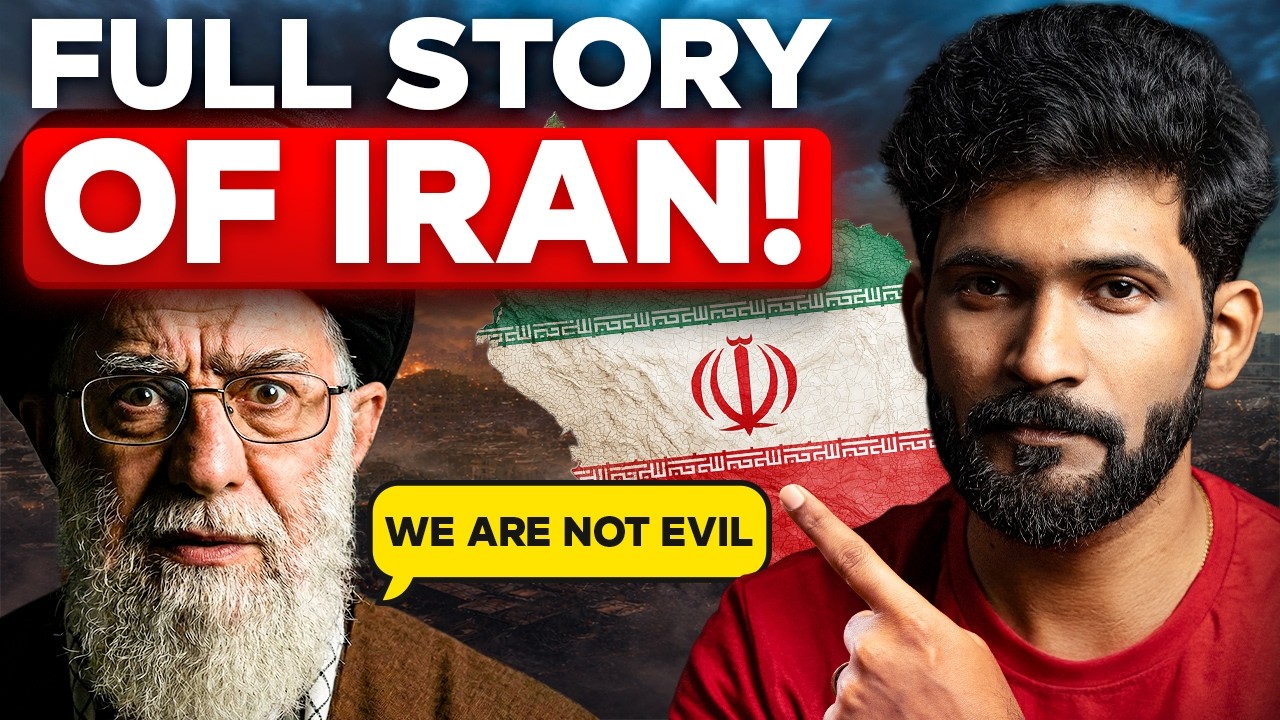
Explore how Iran’s tumultuous history—from British oil concessions to the Islamic Revolution—was profoundly shaped by Western intervention and American influence.
Introduction
In a compelling episode titled How USA destroyed Iran FULL HISTORY in Hindi | Abhi and Niyu, the hosts delve deep into the historical events that have contributed to Iran’s current controversial status on the world stage. The video masterfully navigates through four distinct eras of Iranian history, emphasizing how Western powers, and particularly the USA and Britain, played pivotal roles in shaping Iran’s destiny. As one commentator put it, the video asks: “Who is the real villain—Iran, or the forces that transformed its history?”
In this article, we unpack the key insights from the discussion, exploring each era of Iranian history—British exploitation, the Mossadegh revolution, the Shah’s Westernized rule, and finally, the Islamic Revolution led by Ayatollah Khomeini. Through historical examples, direct quotes, and detailed analyses, the narrative sheds light on a story that is as much about control over oil as it is about the struggle for national identity and independence.
Era 1: British Control and the Darcy Concession
The episode begins with an examination of Iran’s first modern crisis: the Darcy Concession of 1901. In a deal signed by British entrepreneur William Knox Darcy with the Shah of Iran, Britain secured exclusive rights to extract oil from Iranian lands. This marked the beginning of what many perceived as systematic exploitation, echoing the historical exploitation patterns seen with the East India Company in India. As explained in the video, "the British made Iran their personal petrol pump," siphoning off resources meant to fuel the nation's development.
The video explains that while a vast oil field was discovered in 1908 near the Mosque of Sulaiman, the revenues generated hardly benefited Iran. Instead, the bulk of the profits went to the British, who used Iran’s oil earnings to service enormous European loans. A striking example was given from 1931: although the Anglo-Iranian Oil Company recorded profits of 366,000 pounds, they ended up paying a whopping 1 million pounds in tax—an indication of how deeply Iran was being bled economically. This era, characterized by the exploitation of natural resources, set the stage for a longstanding resentment against Western control.
Era 2: The Rise of Mohammad Mossadegh and the Battle for Oil
Moving into the second era, the video highlights the transformative period under Prime Minister Mohammad Mossadegh in the early 1950s. Mossadegh emerged as a strong nationalist voice, challenging the exploitative Darcy Concession by asserting that Iran should control its own natural wealth. He famously questioned, "If Iran has the most oil in the world, then why is Iran so poor?" This pointed critique struck at the heart of the exploitative contracts that had drained the country’s wealth for decades.
Mossadegh’s bold move to nationalize Iran’s oil marked a turning point. The nationalization was seen as a reclaiming of Iran’s rights over its natural resources—a revolutionary step intended to empower the nation. However, his actions infuriated powerful Western interests. The video recounts how Britain, with its wounded pride and significant economic interests, went to its ally, the USA. This alliance resulted in the infamous Operation Ajax, a covert coup orchestrated by the CIA. The operation not only removed a democratically elected leader but also set a precedent for future Western interventions in the region. As stated in the episode, "Mossadegh was not ready to be controlled, and that was why the CIA had to step in." The coup became a pivotal event, shaping perceptions of American interference in Middle Eastern politics for decades to come.
Era 3: The Shah’s Rule – Modernization Amid Western Puppet Strings
After the covert removal of Mossadegh, the third era of Iran's modern history unfolded under the rule of the Shah. A Western-educated ruler with a vision of modernity, the Shah embraced American lifestyles and policies in his bid to transform Iran. His reign was marked by notable modernization efforts, particularly in women's rights. Women were granted the right to education, the freedom to drive, and the ability to dress in Western styles—changes that sparked both admiration and controversy.
However, this period of rapid modernization came at a cost. While the Shah sought to transform Iran into a modern state, his government also became infamous for its authoritarian measures. His secret police, known as SAVAK, was notorious for suppressing dissent and brutally quelling protests. Despite the outward appearance of progress, the Shah’s regime was heavily dependent on Western backing, notably from the USA. During international visits, he was often seen shining as an ambassador of Western advancement, even as his domestic policies led to growing discontent at home.
This duality of modernization and repression defined the Shah’s era. On one hand, economic development and women’s rights improvements seemed promising. On the other hand, the rising tide of repressive tactics and widespread corruption sowed the seeds for future upheaval. As voiced in the episode, the Shah's attempt to mimic Western modernity, while beneficial in some respects, failed to account for Iran’s unique cultural and social context. The warning from King Faisal of Saudi Arabia—that rapid modernization without a grounded understanding of the populace could backfire—proved to be prophetic.
Era 4: The Islamic Revolution and the Rise of Ayatollah Khomeini
The most transformative and perhaps controversial era discussed is the period following the Islamic Revolution of 1979. During this time, Ayatollah Khomeini emerged as a populist leader who promised to restore Iranian identity and reject Western hegemony. Unlike the detached rulers of the past, Khomeini was a man of the people. He spent 14 years in exile, fostering a deep connection with the masses, and when he finally returned, he quickly captured the national imagination with a message of religious purity and anti-imperialism.
The revolution was characterized by widespread demand for change—98.2% of the people, according to surveys mentioned in the video, supported transforming Iran into an Islamic Republic. Khomeini’s rhetoric emphasized that the Shah was not merely a dictatorial figure; he was an un-Islamic ruler who had betrayed Iran’s cultural and religious heritage. With his ascension on April 1, 1979, Iran underwent a radical transformation from a monarchy to a theocratic state. The new constitution, with its Guardian Council overseeing elections and legislation, institutionalized a religious hierarchy over the state. In the words of the video, Iran had “changed its identity” where now, religious doctrine trumped national policy.
However, the revolution also created new challenges. The implementation of the Guardian Council gave a select few the power to veto laws, supervise elections, and disqualify political candidates—measures that have since been criticized for stifling democratic debate. While Khomeini argued that these mechanisms were necessary to maintain Islam’s purity in government, critics claim they effectively cemented authoritarian control. The episode reflects on how the promise of national rebirth eventually morphed into a system where dissent was met with repression.
Modern Iran: Nuclear Ambitions and the Proxy Network
Following the fervor of the Islamic Revolution, the video shifts attention to the challenges facing contemporary Iran. Under the leadership of Khomeini and later his successors, Iran pursued a controversial nuclear programme. The stated purpose was peaceful energy production, but Western intelligence often suspected covert weapons development. Khomeini himself argued that relinquishing nuclear capabilities would only invite further aggression from the USA, who he claimed always prioritized control. "If we give up nuclear energy, then America will turn the tables on us," Khomeini is quoted as saying.
Moreover, Iran’s support for proxy groups across the Middle East became a defining feature of its strategy. The formation of an 'Axis of Resistance'—with Hamas in Gaza, Hezbollah in Lebanon, and the Houthis in Yemen—is seen as part of Iran's response to external pressures. These alliances have led to Iran being branded as a state sponsor of terrorism by many in Western capitals. The video underlines that these measures, while controversial, were born out of a long history of feeling cornered and manipulated by imperial powers. The narrative critically examines how such alliances have further entrenched Iran’s status as a geopolitical pariah in the eyes of the West.
Who Is the Real Villain? A Question for the Ages
Perhaps the most thought-provoking aspect of the discussion is the host’s challenge to the conventional narrative that paints Iran as the perennial villain. The episode raises a critical question: "At what point did Iran become a villain?" The video invites audiences to consider multiple pivotal moments—from the exploitation of the Darcy Concession, the overreach in the Shah’s authoritarian modernization, the coup against Mossadegh, to the eventual Islamic Revolution. Each episode in Iran’s modern history contains both acts of national defense and misguided steps driven by internal and external pressures.
As one segment poignantly asks, who is truly to blame? Is it Iran for fighting for its rights against Western exploitation, or is it the USA and other Western powers who continuously meddled in Iran’s sovereign affairs? The message is clear: when history is written by the victors, it is easy for the narrative to obscure the struggles and grievances of nations like Iran. The video provocatively states, "Until the lion learns to write his own history, the entire history will glorify the hunter."
Contemporary Reflections and Implications for the Future
The discussion does not stop at historical recaps—it also extends to contemporary geopolitics and questions the future of Iran. Observers are invited to discuss whether Iran’s nuclear programme, its network of proxies, and its continued defiance of American and Western influence are a direct consequence of a history filled with betrayals and power plays.
Critics note that even today, Washington’s gaze is fixed on Iran, primarily because controlling Iran is seen as key to dominating future energy resources. The episode warns that America's consistent pattern of meddling may continue—with Iran’s nuclear ambitions providing a pretext for pressure, and its proxy alliances deepening regional conflicts. The historical cycles of intervention, exploitation, and authoritarian backlash seem poised to repeat themselves unless fundamentally new approaches are adopted.
Conclusion: Rethinking Historical Narratives
In summing up the complex saga of Iran’s modern history, the video challenges viewers to reexamine the dominant narratives often handed down from Western powers. From the precarious beginnings under British colonial-like control with the Darcy Concession, through the brief period of nationalistic hope under Mossadegh, to the dichotomy of Western-inspired modernization under the Shah, and finally, to the radical transformation ushered in by the Islamic Revolution, every era has added layers of complexity to Iran’s identity.
As the episode emphatically concludes, the story of Iran is not one of inherent villainy, but rather one of a nation repeatedly wronged by external powers. The narrative puts forth a fundamental question: "Who is actually the villain? Iran or America—those who prioritize their own interests over global justice?" This question is not simply rhetorical; it is a call for a deeper understanding of how power, control, and the legacy of colonization continue to shape international affairs.
The video serves as both a historical analysis and a cautionary tale. It reminds us that global politics is rarely black and white; it is mired in centuries of exploitation and resistance. For nations like India, which also have experienced external influences, this reassessment of Iran’s past is a lesson in sovereignty and the importance of controlling one’s own destiny.
In reflecting on this intricate history, viewers are encouraged to think critically about the narratives presented by dominant world powers. As one of the narrators in the video puts it, "History is always written by the hunter." Only by questioning and rewriting these narratives can nations reclaim their identity and secure a future that respects their sovereignty and natural rights.
Overall, the episode provides an insightful and balanced perspective on a subject that is frequently misrepresented. It challenges the audience to move beyond simplistic explanations and to appreciate the historical context behind Iran’s contemporary struggles. It is a reminder that the true story of any nation is rarely told from a single viewpoint, and that the search for truth requires looking at all sides of a complex narrative.
With these reflections in mind, the discussion leaves us with a critical takeaway: understanding historical context is essential for interpreting modern conflicts. The legacy of Western and American intervention in Iran is a potent reminder of the dangers of external meddling in national affairs, a lesson that remains relevant across the globe today.
By comprehensively exploring each historical era and connecting past mistakes to current geopolitical tensions, the episode provides an enriching and nuanced account of Iran’s journey through the 20th and 21st centuries. It urges everyone to reconsider preconceived notions and to seek a more balanced understanding of international politics.
In the end, the narrative that emerges is both a story of injustice and a powerful call to reexamine the forces that have shaped our world. The history of Iran, as detailed in this episode, is a testament to the enduring struggle for national sovereignty and the high cost of external control—a lesson for all nations striving for true independence.