Pioneering Brain-Computer Interfaces: A Visionary Future
 Factverse Insights|Technology|17 min read|Mar 15, 2026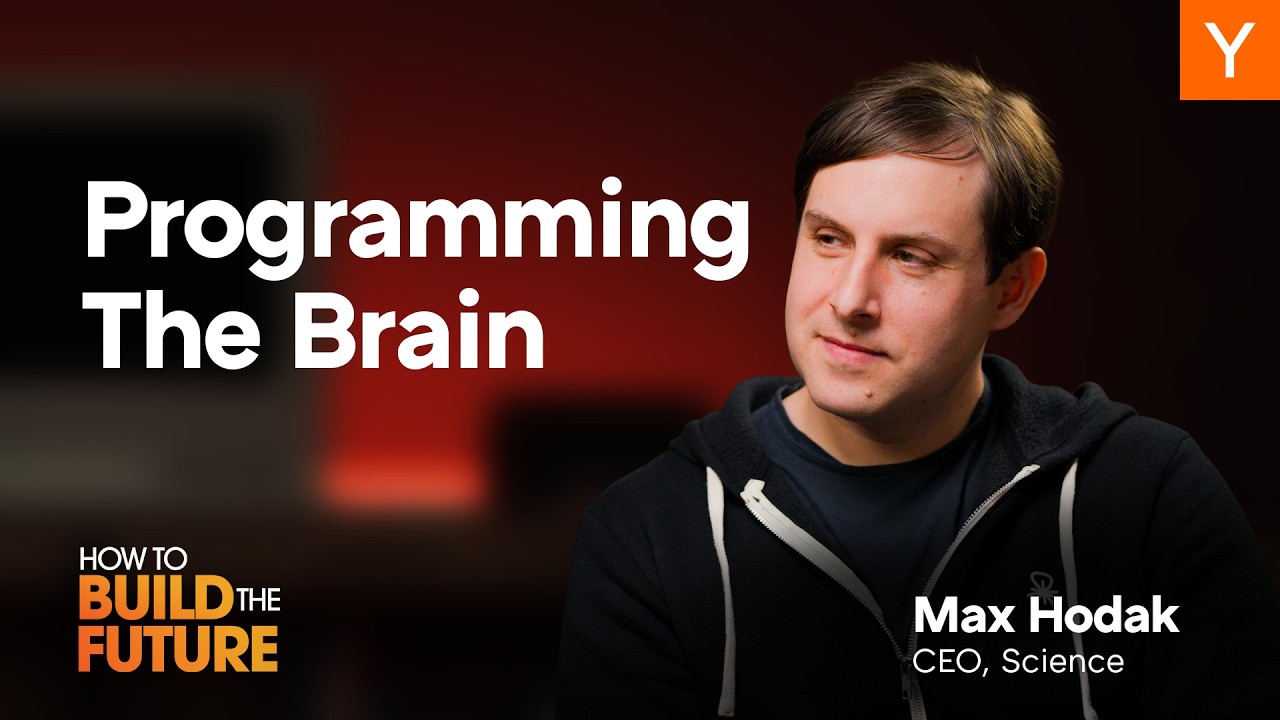
Dive into a deep exploration of brain-computer interfaces, from restoring sight to future biohybrid neural networks, and discover how BCI technology is revolutionizing human experience.
Introduction
In a riveting episode on Y Combinator, Max Hodak, co-founder of Neurolink and founder of Science, took viewers on an immersive journey into the rapidly evolving world of brain-computer interfaces (BCIs). With a focus on groundbreaking work in vision restoration and neural engineering, Hodak detailed recent clinical breakthroughs, explained the intricate mechanisms of retinal prosthesis and neuroplasticity, and shared his predictions on how BCIs will redefine human life in the near and distant future.
The conversation provides a unique blend of technical insight and visionary foresight. From the challenges of stimulating the brain to achieve coherent visual perception, to the potential of engineering interfaces that not only restore lost functions but also expand our cognitive capacities, this discussion is a must-watch for anyone interested in the convergence of medicine, neuroscience, and next-generation technology.
In this article, we break down the core insights from the episode, highlighting how BCIs could revolutionize the way humans interact with technology and even with each other.
Breaking Ground in Vision Restoration
The Promise of Retinal Prosthesis
A central theme in the discussion was the revolutionary progress in restoring vision through a tiny retinal implant. Hodak described a clinical trial where a 2mm x 2mm silicon chip is implanted beneath the retina. This microscopic array of solar-panel-like electrodes allows patients, who once suffered from conditions like macular degeneration or retinitis pigmentosa, to experience a coherent image perception.
During the interview, Hodak explained, "We completed a big clinical trial last year that was even published in the New England Journal of Medicine. Our device is a small chip implanted in the back of the eye, and patients wear glasses with a camera and a laser projector. Wherever the laser hits the implant, it excites the bipolar cells above it, bypassing dead photoreceptors." This innovation does not merely create flashes of light but is designed to generate a cohesive visual experience—what he called "form vision."
This technology represents a major advance over earlier studies. Previously, devices like those developed by Second Sight could produce individual flashes through electrical stimulation of the optic nerve. However, those methods were limited; the brain could not piece together the signals into a recognizable image. In contrast, by targeting bipolar cells before the neural signal is heavily compressed by the retina, the Science team has managed to trigger a response that results in the perception of letters on an eye chart—even when patients had not seen faces for a decade.
Overcoming Biological Complexities
A significant challenge in developing such a device is rooted in the inherent complexity of biological systems. Hodak emphasized that the retina is not just a camera sensor but a highly optimized biological processor. With billions of photoreceptors compressing the visual stream into about 1.5 million optic nerve cells, simply reintroducing an image with electrical pulses has always resulted in a chaotic output.
The ingenious insight here was to stimulate the bipolar cells, the critical processing layer, rather than the compressed signals from the optic nerve cells. This careful selection of the target cells allowed the brain to reconstruct meaningful images. Hodak noted, "If you excite the bipolar cells with an image, you actually get a coherent picture in the mind’s eye. This has been a huge breakthrough because it is well founded in our understanding of how the retina processes visual information."
Harnessing Neuroplasticity for BCI Success
Adapting the Brain Through Feedback
One of the most fascinating aspects of BCIs is the role of neuroplasticity—the brain’s remarkable ability to adapt to new inputs. Hodak explained that even in adults, the brain can learn to integrate new types of sensory information with surprising ease. For example, in early experiments, researchers presented patients with simple stimuli (like a flash of light) paired with concurrent auditory signals. Over time, with consistent feedback, the brain began to predict the flash even when only the tone was delivered.
This phenomenon illustrates a key principle of BCI: the brain does not remain static. Instead, it is continually adjusting its internal models in response to new input. In his own words, "If you place an electrode anywhere in the brain and give the person feedback that a certain neuron is firing, the brain can learn to control that neuron over just a few minutes." This insight is fundamentally significant because it suggests that even low-bandwidth interfaces can have profound effects if given time and proper feedback.
Critical Periods and Lifelong Learning
A natural concern regarding BCIs is whether they function only in the young, whose brains are more malleable. While there are well-documented critical periods in early development—when the brain learns to process sensory input for the first time—Hodak reassured viewers that the adult brain retains a significant degree of plasticity.
Even if early developmental windows are missed (as in the case of congenital blindness due to cataracts), the brain still exhibits an ability to rewire and adapt, although the process may vary from person to person. Drawing on real-world examples, Hodak recounted cases where patients newly endowed with sensory input had to retrain their brains to distinguish external stimuli from internally generated phantom perceptions. This adaptive capacity is at the heart of BCI success.
The Next Frontier: Expanding Beyond Restoration
From Restoration to Augmentation
Beyond restoring lost functions, BCIs present an opportunity for human augmentation. Hodak speculated on a future where BCIs evolve into multi-faceted platforms—akin to a new category in medicine. He envisioned a landscape where companies deploy different types of BCIs targeting a variety of needs: from recovering vision or hearing in the disabled to potentially enhancing cognitive abilities in healthy individuals.
According to Hodak, "I don’t think BCIs are a single product—they will become a category in themselves. Just like pharma isn’t one drug, BCIs are going to be a suite of devices catering to different applications." For example, some BCIs might focus on digital enhancements via non-invasive methods like ultrasound, while others, such as the retinal prosthesis, require sophisticated implants due to their high complexity. As technology evolves, the risk-benefit calculus for using these interfaces could shift, eventually making them valuable for a broader population, including aging individuals seeking to preserve or extend their functional abilities.
The Biohybrid Neural Interface Revolution
Perhaps the most visionary aspect of the discussion was the introduction of biohybrid neural interfaces. By seeding implants with living, engineered neurons, scientists are exploring ways to create ultra-high bandwidth connections within the brain—essentially building a new cranial nerve.
Hodak dove into this topic, saying, "Imagine if nature could build a next-generation USB port for the brain. Instead of having traditional implants with rigid electronics, we could integrate living neurons that form natural biological connections." This approach, which leverages hypoimmunogenic stem cells, could pave the way for devices that seamlessly integrate with existing brain tissue without triggering inflammatory responses or requiring extensive genetic modification.
Such biohybrid systems are designed to grow and form connections over time. Drawing a parallel to the science fiction epic Avatar, Hodak likened these new networks to the additional neural pathways seen in the movie’s alien species. This naturalistic assembly of neural connections holds the promise of not just restoring lost functions, but potentially creating a bridge between human minds—a future where direct brain-to-brain interfaces could be used to share thoughts, intentions, or even unified experiences.
Merging BCIs with Artificial Intelligence
The Convergence of Brains and Algorithms
An intriguing thread running through the conversation was the interplay between BCIs and artificial intelligence (AI). Hodak emphasized that the parallel evolution of AI and neural interfaces is not accidental; rather, advancements in one domain are informing breakthroughs in the other.
He noted, "The representations we see in AI models are remarkably similar to those in the brain. In many ways, both AI and neuroscience are learning from each other. The brain constructs its reality using latent spaces, much like the hidden layers of a neural network in AI." This cross-fertilization has important implications. As researchers decode the brain’s language—its representations and the patterns of its activity—they can design AI systems that mirror these processes, leading to smarter, more intuitive interfaces.
Enhancing Communication and Integration
The brain processes all sensory information through a set of limited nerves—the so-called API of the brain. For instance, visual data enters through cranial nerve 2, motor commands exit via spinal nerves, and so on. The challenge for BCI researchers is to tap into this limited pathway and expand the capacity of the system without disrupting its underlying integrity.
Hodak explained, "Once you can decode these signals, you can run them through an AI model that understands the representation of an object or action, and then translate that back into neural stimulation. This two-way translation is at the core of developing next-generation BCIs." With higher bandwidth and bi-directional communication, the potential applications extend far beyond simple restoration—they could enable new forms of human cognition and even collective intelligence.
Ethical Implications and Long-Term Impact
Risk-Benefit Considerations
While the technological promise of BCIs is immense, Hodak also addressed the ethical and logistical challenges inherent in deploying such devices. Initially, BCIs have primarily targeted patient populations with severe disabilities, where the risk-benefit ratio clearly favors intervention. Take for instance the current retinal prosthesis: while it requires invasive surgery and has limited resolution (currently delivering about 10 bits per second of signal), the dramatic improvement—from no sight to being able to read an eye chart—is life-changing for those affected.
Hodak cautioned, "I don't think healthy 30-year-olds will opt for this invasive procedure until the technology becomes significantly more refined. The balance between surgical risks and the restorative benefit must be carefully considered." As the devices evolve to offer native acuity and richer sensory experiences, their application may eventually expand, yet the journey towards widespread use necessitates rigorous safety and ethical oversight.
Rethinking the Future of Medicine
The discussion also touched on a transformative vision for medicine. Hodak contrasted the traditional drug-discovery approach with what he described as the neural engineering approach—a method where medical breakthroughs are achieved by directly interfacing with the body's control systems.
He elaborated, "Medicine has been largely about trying to correct biological processes with drugs. With our approach, the goal is to engineer solutions that work directly with the brain—the organ that ultimately creates our experience of reality." This paradigm shift is not just about curing diseases or replacing lost functions; it’s about rethinking the very interface between human beings and the world around them, offering new pathways to enhanced longevity and quality of life.
Quality of Life and Lifespan Extension
In a thought-provoking forecast, Hodak mused on the long-term impact of these technologies. He suggested that the current moment might be the kickoff to an era where significant longevity gains are achievable, speculating, "I think it is very possible that the first people to live to a thousand are alive right now." Even if such outcomes seem like science fiction at present, the dual enablers of AI and BCIs might, together, catalyze transformative changes to human life spans and capabilities.
This outlook goes hand-in-hand with ethical debates, especially around quality of life. Maximizing the functional benefits—whether restored vision, improved motor control, or elevated cognitive capacity—must be weighed against the risks of invasive procedures and the complexities of integrating technology with biology. The conversation highlighted the need for further interdisciplinary research and a nuanced discussion on how best to deploy these powerful tools in medicine.
The Evolution of BCIs: From Concept to Reality
Learning from Early Pioneers
The origins of Neurolink and the broader BCI movement are rooted in a willingness to embrace risk and challenge convention. Hodak recalled his early days in the field: "I had a clear sense of what I wanted to achieve in brain-computer interfaces, even as an undergrad. It required persistence and a willingness to tackle complex problems head on." His journey illustrates how the fusion of software expertise with a deep understanding of biology can lead to breakthroughs that once belonged solely to the realm of speculative fiction.
In the early 2010s, as the field of neural decoding was emerging, Hodak was involved in projects that pushed the envelope on what computers and the brain could achieve together. His work laid the foundation for current advances, not only by refining surgical techniques and implant materials but also by developing the software algorithms needed to decode and stimulate neural representations effectively.
Scaling Up and Team Collaboration
One standout theme throughout the discussion was the emphasis on collaboration. Building these advanced systems is not a one-person show, but rather a monumental convergence of expertise from neuroscience, engineering, software development, and even bioethics. Hodak stressed that working alongside visionary minds (including even Elon Musk during his work with Neurolink) had dramatically increased his ability and perspective.
He reflected, "Working for someone like Elon really leveled up my understanding of how to execute technically complex projects that require an interdisciplinary approach. Oftentimes, success in a startup is part about having the right mentors and team dynamics." This collaborative spirit is a cornerstone of the future of BCIs, where collective innovation will drive the progression from rudimentary systems to sophisticated, life-changing devices.
Bridging the Gap: From ICU to Everyday Life
Reimagining Organ Transplantation and Beyond
While much of the discussion centered on neural restoration and augmentation, another promising application of advanced engineering was in the field of medical perfusion and organ transplantation. Hodak recounted the challenges posed by current technologies such as ECMO—a temporary lifesaver in critical care situations, but one that is expensive and constrained to the intensive care unit environment.
Hodak shared a striking anecdote of a 17-year-old patient who was kept alive on a heart-lung machine, only to face a dire ethical dilemma as the device sustained his life while robbing him of quality living. He observed, "The gap between what is technically possible and what is economically or logistically practical is vast. We need to engineer systems that not only sustain life but do so in a way that affords patients real, lived experiences outside of a hospital bed." This perspective reflects a broader drive to render complex, life-sustaining technology both scalable and humane.
Toward the Next Generation of Life-Support Systems
In rethinking these systems, the goal is to downscale massive devices into portable, even wearable, solutions. Imagine a future where a device as critical as a heart-lung machine could be miniaturized to the point where it acts like a backpack accessory, radically transforming patient mobility and comfort. This same mindset, applied to BCIs, underscores the importance of engineering innovations that blend seamlessly into daily life.
The vision is expansive: devices that start as highly specialized treatments for severe disabilities could, over time, become tools for everyday enhancement and longevity. In Hodak’s words, "BCIs are going to evolve from being a niche medical solution to a ubiquitous part of how we interface with technology and even with each other." This evolution is anticipated to occur gradually, with early applications targeting those in desperate need before expanding into consumer markets.
The Road Ahead: Challenges and Opportunities
Navigating Technical Hurdles
Despite the substantial promise, the development of advanced BCIs faces numerous technical challenges. The precision required for stimulating specific brain areas without causing collateral damage, managing the body’s immune response to implants, and ensuring long-term stability of these devices remains a field of intense research.
Hodak commented on these issues candidly. He highlighted that while the science is making leaps and bounds, deploying such sensitive technology widely will require further breakthroughs in materials science, microelectronics, and biocompatible design. The iterative nature of these innovations means that for now, many of the most advanced devices—such as the biohybrid neural systems—are still in the experimental phase. Nonetheless, the current progress in electrical stimulation, coupled with enhanced understanding of the brain’s API, suggests a promising trajectory.
Ethical, Legal, and Social Implications
Every new technology brings with it a host of ethical considerations, and BCIs are no exception. The possibility of interfacing directly with the brain raises barriers that must be navigated carefully—from questions of consent and privacy to the risk of altering the fabric of human consciousness itself.
Speakers in the interview touched upon the ethical dilemmas by comparing current life-sustaining machines and the broader societal challenges they pose. The conversation underscored that as BCIs become more powerful and pervasive, society will need to adopt new frameworks for understanding the balance of risk and benefit, much as has been done for other transformative medical technologies. Hodak’s commitment to developing these devices in a responsible manner is clear: "We are not just building a product. We are reshaping the way we think about medicine and human interaction with technology. We have to ensure that what we build enhances quality of life in a real, tangible way."
Scaling Impact and Ensuring Accessibility
A recurring theme throughout the episode was the fact that while the current devices are aimed primarily at the most disabled patients, the eventual goal is to create BCIs that are both more effective and more widely accessible. Initially, the severe risk profile of invasive brain surgery means that only patients for whom traditional treatments have failed will be candidates. However, with ongoing improvements in both the resolution of these devices and the methods by which they are implanted, it is anticipated that even the general population might one day consider such enhancements.
The discussion brought to light that there will be a gradual transition: from life-saving devices for the critically ill to sophisticated tools for augmenting healthy human performance. This transition mirrors the evolution seen with smartphones and personal computers—a radical change driven by technological innovation, market pressures, and a collective shift in societal aspiration.
Conclusion: A New Era for Humanity
In closing, the conversation with Max Hodak paints an exhilarating picture for the future of brain-computer interfaces. What began as an incremental series of biomedical experiments is rapidly transforming into a takeoff era for technology that could redefine what it means to be human.
Key takeaways include:
- The successful development of a miniature retinal implant that restores coherent vision, marking a leap beyond simple flashes of light.
- The ability of the brain to adapt through neuroplasticity, opening the door for long-term integration of new sensory inputs.
- The promise of biohybrid neural interfaces that leverage engineered neurons to create highly integrated and scalable connections within the brain—akin to developing a next-generation "USB port" for human cognition.
- The integration of BCIs with AI, where neural representations and latent spaces suggest a unified framework for understanding both artificial and natural intelligence.
- The ethical and societal challenges that accompany such transformative technology, prompting a thoughtful reevaluation of how we approach medicine and human enhancement.
As Hodak boldly predicted, "I think it is very possible that the first people to live to a thousand are alive right now." Whether restoring sight, enhancing motor control, or even merging minds through direct brain-to-brain interfaces, the future of BCIs is not just about restoring lost functions—it’s about radically reimagining human potential.
This moment in time marks a critical juncture in the evolution of technology, where thoughtful engineering meets the very essence of what it means to be alive. The implications are as profound as they are far-reaching: by harnessing the power of BCIs, we may soon bridge the gap between biological limitations and the boundless possibilities of digital augmentation.
For those eager to learn more about this transformative technology, The Future Of Brain-Computer Interfaces is an essential watch that captures the spirit of a new age in human evolution.
As we look to the horizon of the next 10 to 20 years, the synthesis of neural engineering, AI, and biohybrid systems promises to reshape not just medicine, but the human experience itself. Whether for restoring lost senses, augmenting human cognition, or even redefining interpersonal communication, BCIs are poised to become one of the defining technologies of our time.